
Technology
There are three technology subjects run as part of our specialist rotations:
STEAM
Food Technology
Digital Design and Technology
Year 7 students spend half a term in each technology.
Year 8 students choose 4 subjects for the year. They choose from the technology and specialist areas. In each subject area, they have 15 lessons.

Introduction of Technology Subjects

STEAM
-
STEAM provides rich learning opportunities to be creative, work with innovative technology and design solutions that have the potential to make a difference in the real world.
Students will begin with a challenge and follow the ‘Engineering Design Process’ to imagine, design, and create a prototype or outcome — they become real inventors and problem-solvers!
Throughout STEAM, students:
learn to fly drones, programme robots, use virtual reality (VR) to explore real-world issues, and use Tinkercad to design and 3D-print prototype solutions.
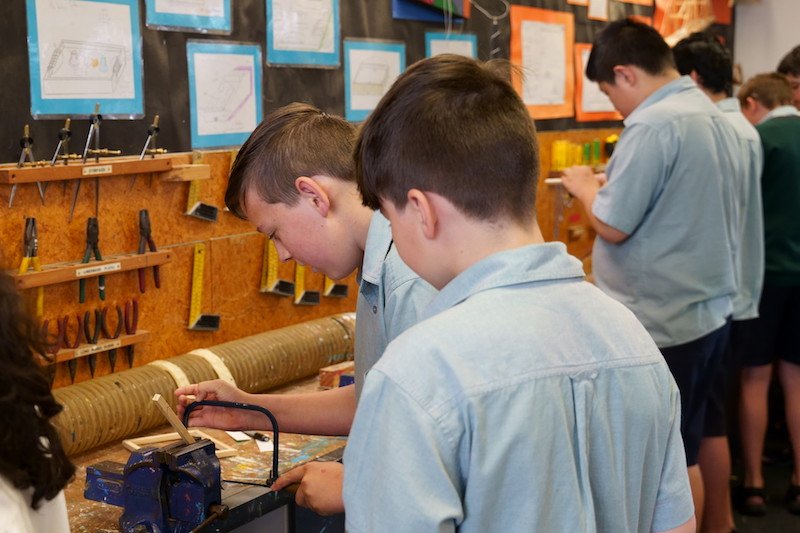
get hands-on with circuits, batteries, and motors to engineer movement. We use tools like laser cutters to precisely shape materials and work with hard materials when building final prototypes.
apply science concepts — such as building strong structures, mechanical systems, and understanding environmental factors — to ensure our solutions genuinely work in the real world.

Food Technology
-
Building Technological Capability
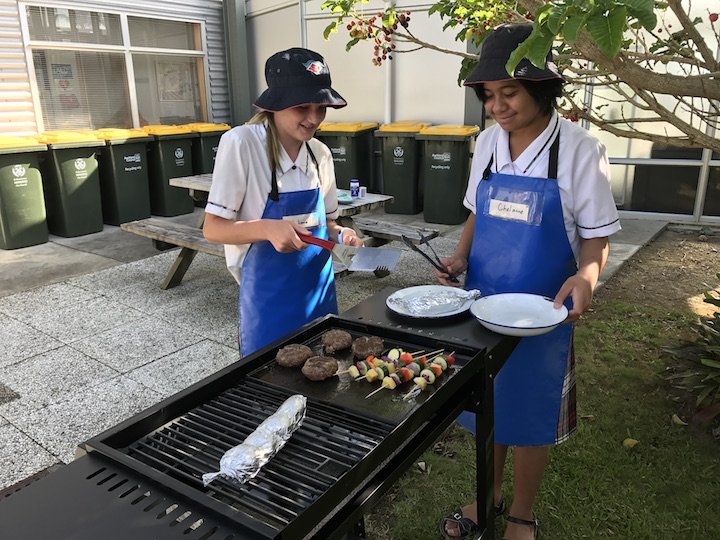
Year 7 students begin their journey as Food Technologists through Street Food from Around the World. They explore how food connects people, cultures and communities while developing fundamental practical skills, confidence and safe kitchen practices.
Through authentic street food recipes, students investigate ingredients, cooking techniques and the science behind how food changes during cooking. They observe and explain changes in ingredients and use their learning to evaluate and improve their technological outcomes. Students also make connections between food, culture, sustainability and community.
Our Food Technologist Learning Journey
Investigate → Predict → Prepare → Cook → Observe → Explain → Evaluate
-
Applying Technological Capability
Year 8 students build on their practical skills, food science knowledge and technological capability through increasingly challenging cooking experiences before applying their learning to an authentic Food Technology Design Challenge.
Students work with a stakeholder to investigate their needs and develop a design brief. They then research, develop ideas and design, create, test, evaluate and refine a food-based technological outcome. Students apply their knowledge of ingredients, food processing and practical techniques to develop an outcome that meets the stakeholder's needs and is fit for purpose.
-
Kawhe Hui Entrepreneurial Team: Terms 1–4
The Kawhe Hui Entrepreneurial Team is open to Year 8 students who are interested in developing their entrepreneurial, leadership and hospitality skills. Students wishing to participate are required to submit a written application.
Selected students work as part of a range of teams, including Entrepreneurial, Financial, Cuisine, Service and Advertising. Together, they are responsible for the day-to-day operation of our student-led café, Kawhe Hui.
Students are expected to attend weekly lunchtime training sessions and participate in a roster to work in the café when it is open. Through this experience, they develop skills in teamwork, leadership, communication, financial literacy, food preparation, customer service and entrepreneurship.

Digital Design and Technology
-
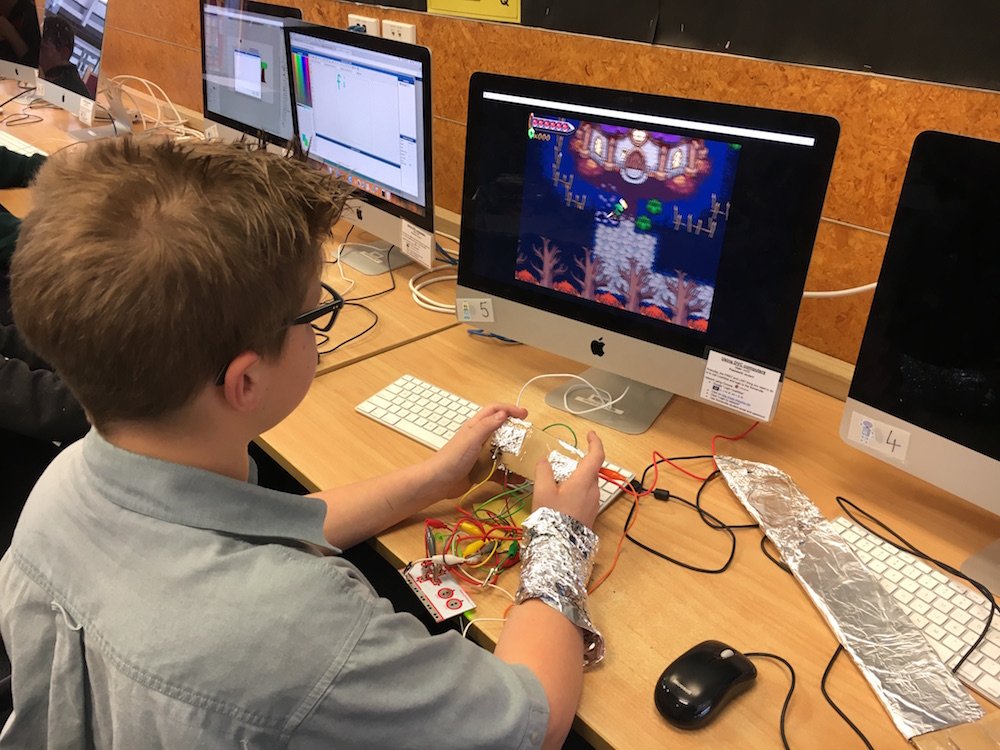
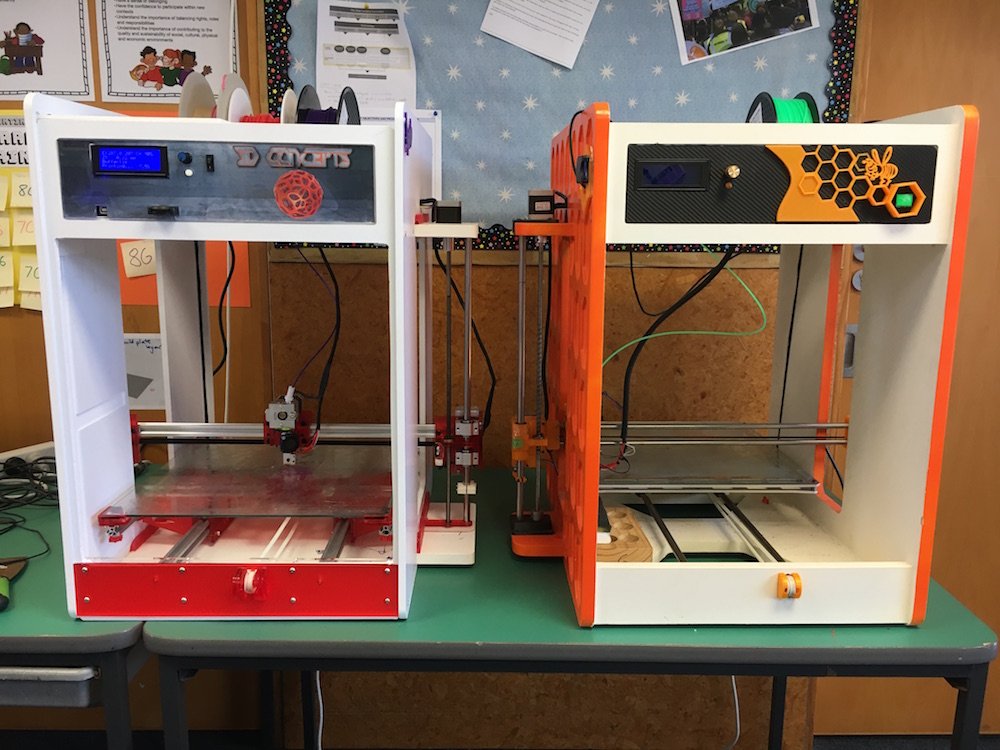
Year 7 students will learn about 3D design by using computer aided design (CAD) software to create an object to be 3D printed. They will also explore coding and computational thinking by creating a game.
-
Year 8 students will extend their knowledge and skills in 3D design and coding. They will use computer aided design (CAD) software to create a more complex object to be 3D printed, as well as being introduced to other forms and uses of 3D design. They will also continue to learn about coding and computational thinking through gaming.
-
The learning intentions related to the subject of Digital Design and Technology at Somerville Intermediate are listed below. The intentions are for students to cover a broad base of problem solving activities that require them to communicate ideas through computer aided design software and coding.
Both year 7 and year 8 are taught 3D printing and coding by creating original. Digital Design and Technology is one of the four subjects taught at Somerville linked to the New Zealand Technology curriculum, as well as the emerging Digital Technologies curriculum.
To develop a sound working knowledge of 3D printing and computer aided design (CAD) software.
To apply appropriate mathematical and technological knowledge to solving 3D design problems.
To develop a basic understanding of the purpose and types of coding.
To use coding and computational thinking to develop a game.
To understand and apply the basic processes and elements of design.
To gain a knowledge of materials, processes, and components and of their application to develop a product, system, or design.
To learn to evaluate how well solutions meet a given brief or instruction.
To describe what the internet is, how it works and how we can keep it safe for the future.